-
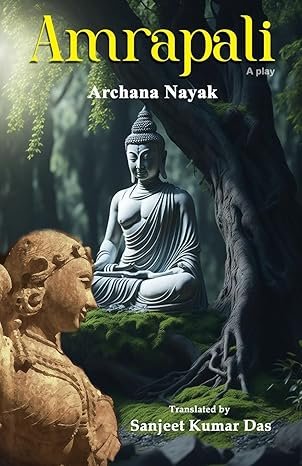
Amrapali
₹250.00The Play Amrapali is based on a famous story of the Buddhist period in India. Generally, many stories and characters, as enshrined in the great epics of the Mahabharat and the Ramayan of India, are creatively transferred and have wider acceptability and readership among the public. The incidents of Buddhist and Jain texts scripted in Pali and Prakrit languages strongly impact contemporary life in society and literature. While reviewing the literature of Bauddha Bhikshunis (female mendicants), I came across Ambapali, a Courtesan (Bride of the City) of Vaishali. There was a small state, Vaishali, in North India two thousand and six hundred years ago. It was the Sangha-governed Republic. A vast mango orchard was on the outskirts of this city. One day, while wandering, the mango grove’s watchman was startled to see an abandoned newborn girl beneath a mango tree. As per the approval of the state council, the issueless watchman nourished and nurtured the girl. When she found the child under the mango tree, she was named after Amrapali/Ambapali/Amba.Like a celestial nymph, Amrapali became a young nubile girl known for her beauty and charm. She was divinely graced. She was second to none in dancing and singing. Having participated in the Annual Dance Programme, Ambapali was declared the ‘Royal Court Dancer’ by the State Republic. Because of her extraordinary beauty, the Merchants, the Barons, and the members of the State Council started fighting among themselves to be with her. So, the state Board of Council announced the Courtesan (Bride of the City) for the city’s welfare. Every male in the town would have the right to spend time with her.The anecdote of Amrapali’s beauty and dance performance of sublime order had been spread worldwide. The insolent Emperor of Magadha, the enemy state of Vaishali Republic, Bimbisara, had disguised himself to enter the palace of Ambapali and received hospitality as a guest for seven days. When the State Council of Vaishali came to know about the matter, it immediately tried to arrest King Bimbisara; Ambapali helped him escape the spot. Then, the love story of Bimbisara and Amrapali was brought to the limelight. The State Council accused Ambapali of developing a love relationship with the King of the enemy state. On the other side, the King of Magadha Bimbisara fought with the Vaishali Republic to marry Ambapali and won the state. However, Ambapali showed hesitation in moving to Magadha and leaving Vaishali. At this time, the most compassionate Lord Buddha reached the city. Ambapali surrendered at the feet of Tathagata Buddha and started to lead the life of a female mendicant with the hope of getting nirvana (Salvation).
-
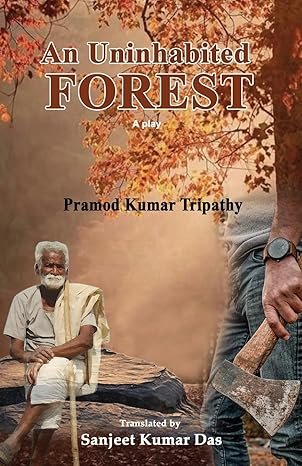
An Inhabitaed Forest
₹250.00Is there any forest where no human beings reside? There may be.Is there any forest where trees can talk, sing, listen to, laugh, cry, and offer fruits sensing one’s mind? There may be.Maybe, hearing the human’s footsteps, they will be silent, or else they will be quiet by the stroke of an axe.Had they had wings, the trees would have flown miles over miles, but had they had the wings, what would human beings have done? There would not have been any civilization, society, or exploitation.To the continuous exploitation, indecisive harassment, and plundering, the infinite number of documents of man’s materialistic greed in the name of civilization, religion, party politics, and dumb witness is the forest. Forest is the cornerstone of human civilization.I have never seen such a tree. It may happen so that the trees may not talk to me. So, imagining such a play through direct experience may not be expected.In contemporary society, and the decline derived from that, the languor of defeat is created in the human mind. Very mysteriously, an opposite idea is made: “Had it been so, what would have happened!” To the artist, conscious of the situational needs, this type of idea and whim is necessary, for there is the hope that, maybe, the literature created out of this will make the people aware of, and the human civilization may sustain from the forthcoming disaster/apocalypse.
-
And the Wretched
₹250.00The playwright Narayan Sahoo brilliantly knocks on society’s door to glance over the agonies and suffering the dominated class is experiencing daily through his O Saba Sesha Loka. This has been translated from Odia into English as And the Wretched. Here, he focuses on how people experiencing poverty suffer unendingly and their voice is unheard diachronically. Moving across the axes of Time and Space, the picture remains almost the same, though the illustrations he has stated are of this Indian Peninsula. The powerless and the voiceless raise their voices against the powerful and dominant classes for approving their natural rights. The writer advocates the mantra (dictum), as prescribed in the dialogue of Great Man, can be simplified that nothing is possible through negotiation so far. The alternative to this is revolution, the means of ascertaining one’s rights and individuality. He painstakingly cites Ekalavya’s case from the Mahabharat, the historical case of the Sun Temple of Odisha and the contemporary society wherein we are all the subjects successfully. He has undoubtedly justified the title of his play. Let’s look at the vignettes he has snapped in his creative oeuvre for the wider readership.
-
Bewildered God
₹250.00The play Bewildered God, comprising fourteen scenes, unleashes a different taste to the readers and audience of Odia literature. In this play, the playwright Dr Narayan Sahoo has been unique and different from his earlier predecessors and contemporary playwrights of Odisha in the sense that he has tactfully and sarcastically dealt with the voice of dissent against communalism, violence and bloodshed, of human beings’ religion and livelihood.Jagannath, Ram, Ishwar, Jesus, and Allah are different names of only one omniscient, omniscient, and omnipresent soul. Though the learned pundits and experts of all religions undisputedly have accepted this view, today in Ayodhya, the Ram Mandir-Babri Masjid issue is now pan-Indic, not confined to Hindu and Muslim communities only. As the different feet of an Octopus spread in different directions, the deadly poison of communalism has infected the people and their lifestyle of entire India. Today, God is not the faith of devotees but rather a toy in man’s hands, or if we speak, as stated by the playwright, Man is a master, and God is the magician to run the show as directed by the master.The horrible Gas Tragedy had happened in Bhopal in 1984, and by that, many people were disabled, and so was Mary. She lost her procreative power. Her unfortunate husband Joseph knew this, but he couldn’t express this bitter truth to Mary. The playwright has very beautifully penned down the sheer reality of life. One day, human beings were considered as the children of God because of the existence and development of heavenly feelings in them. The cadre of attendants attached to the temple, such as priests, servitors, and administrators, were worshipped and respected in the society. But today, the Head Priest and Head Servitor in the play, engrossed in their carnal desire and longing for money, have used God as an instrument. Today, Ishwar Nivas (Dwelling Place of God) turns into a playground of pretension, deception, hypocrisy, and corruption, instead of being the storehouse of devotion and conviction, . The Head Servitor has not withdrawn himself from enjoying the bodily pleasure of devadasi (a female dancer attached to a temple) Leelamayee at the dead hour of night. However, the Christian Mary’s youth and money are the objects of his temptation. For that reason, Mary couldn’t protect herself. It was not for Mary only, but for God who was worshipped on Ratnabedi (the raised platform), and that His flute and uttariya (Shawl) the servitor has stolen is a trivial matter. At the same time, for his self-interest, this man has blamed God. Therefore, God becomes helpless for his release from social criticisms and blemishes. It is marked that his existence is practically possible only because of the Head Priest and Head Servitor. The title of the play is properly justified. Despite this, everyone is to be tested with the touchstone of Time. Time is also an imaginary character in the play. Forfeiting God’s interest, the people erect here the boundaries of communalism among them and created the mountain of religion, and are continuously engaged in inhuman activities. These are closely marked by Time and will be watched in future. Time is only the silent observer of all these happenings in the world. There will be no community, religion, deception, and hypocrisy in future- but only the supremacy of Time- with this possibility, the playwright has ended the play. As ‘God’ and ‘Time’ are characters in the play and have expressed their views, the play generates a new excitement in the hearts of the readers and viewers.
-
Chitra Pratima
₹200.00चित्रप्रतिमा (नाटक) – एक संक्षिप्त परिचययह नाटक एक दो पीढ़ियों वाले एकल परिवार (micro family) की कहानी है। नाटक के पात्रों के पीढ़ीगत अंतर को प्रदर्शित करने के अलावा परिवार के भिन्न-भिन्न लोगों के बीच की मनस्तात्विक विभिन्नता तथा स्वीकार्यता को इस नाटक में अधिक तरजीह दी गई है। नाटक में कुल चार पात्र हैं – पिता, माता, बेटी और दामाद। माँ गृहिणी है। बेटी नौकरी करती है, उच्च पदासीन दामाद के साथ एक ही शहर में वह अलग रहती है। लेकिन माँ-बाप के पास वह अक्सर आती जाती रहती है। माँ के साथ गपशप के दौरान अपने पारिवारिक जीवन से संबंधित अंतरंग समस्याओं को वह साझा करती है। युक्तिपरक तर्क भी किया करती है। बात-बात पर पति के साथ उसका मन-मुटाव हो जाया करता। अक्सर छोटी-छोटी बातों पर वह नाराज हो जाया करती। दरअसल अपने पिता को वह दुनिया का सर्वश्रेष्ठ तथा सुदर्शन पुरुष मानती है। बात-बेबात पति की तुलना वह पिता के साथ करती तथा हर बार अपने पिता की तुलना में पति उसे न्यून लगते। दामाद के साथ बेटी के इस व्यवहार का खुलासा एक दिन माँ-बाप के सामने हो जाता है। माँ चिंतित हो पड़ती है तथा अपने पति के साथ उसकी अपनी अनुभूति तथा अपने सुचिन्तित व्यवहार को बेटी के साथ साझा करते हुए उसे उपदेश दे डालती है, जो उसकी बिखरती हुई गृहस्थी को सँवार देती है। इस नाटक का सबसे शक्तिशाली पहलू है इसका संवाद। संवाद के जरिए ही कोई नाटक आगे बढ़ता है। प्रस्तुत नाटक के संवादों में गभीर और गंभीर दोनों ही आवेदनों की उपस्थिति पाठकों तथा दर्शकों को स्पर्श करेगी, ऐसी मेरी धारणा है। दूसरी बात यह है कि इस नाटक में जिस समस्या का जिक्र किया गया है वह हमारे समाज की एक ज्वलंत समकालीन समस्या है, जो आज घर-घर में व्याप्त है।
-
Kalapahada
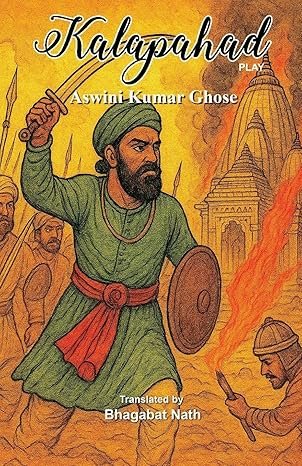
₹300.00The traditional account of Kalapahad, a Hindu renegade and an iconoclast has influenced the Odia social and literary space. According to some historical documents, his original name was Rajiv Lochan Ray or Kalachand Roy Bhadury, a Bengali (Barendra Brahmin) who fell in love with Dulari, the beautiful and charming daughter of Sulaiman Karrani, the Nawab of Bengal. He married her after his conversion to Islam.But he repented of his deed as he faced boycott in the society. Therefore, he wanted to return to Hinduism.
But the Hindu society refused to accept him as a Hindu. At last, he came to the Temple of Lord Jagannath at Puri to perform expiation to convert himself to Hinduism. But the priests scornfully turned down his prayer for conversion. He got enraged and assumed the name of Kalapahad and vowed to ruin Hindu religion, images and temples.Madalapanji, the temple chronicle holds that Kalapahad desecrated the Jagannath temple. According to this tradition, “when the servitors of the temple heard of Kalapahad’s design on the temple, they took the images out of the temple and hid them at a place named Hatipada near Chilka lake. But Kalapahad learnt of this and brought the images from that place on elephants. He carried them to the bank of river Ganges and set fire to them. Just at that time a miracle happened. His body got cracked into pieces. Being perplexed by this, he brought out the gods from the fire and dumped them in the Ganges. Holy Ganga carried the Brahma (or Brahma Pinda) downstream where a Vaishnava devotee Bishar Mohanty extracted the immortal part (Brahma). Later he consecrated the Brahma at Garh Kujanga temple. The ‘Brahma’ was worshipped there for seven years, (1568A.D to 1575 A.D). In 1575 A.D during the rule of Ramachandra Dev, the first king of the Bhoi dynasty, ‘Brahma’ was brought from Garh Kujang and kept at Khordha Garh by him. Next year in 1576 A.D, the construction of new images, their entry in to the temple along with the installation of ‘Brahma’ in them were performed. This account of Kalapahad has been mentioned by Dr.Sarat Chandra Biswal in his article, “Sri Jagannath and Kalapahad” published in Odisha Review.
-
Mukunda Deb
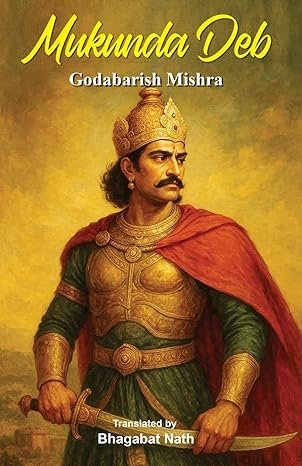
₹300.00Historical play Mukunda Deb (1920) depicts the heroic exploits of Mukunda Deb, the last independent Hindu King of Odisha. This historical character figures as the tragic protagonist in the play. He is heroic, generous, magnanimous and a great patriot. He sacrificed his life in his bid to protect the sovereignty of Utkal, his motherland. The character of Mukunda Deb can never be portrayed without the character of Kalapahada and Ramachandra Bhanja. The playwright has given due attention to these characters. Portrayal of female characters is relevant to the play. The play is an outstanding piece of dramatic work.
-
Nabakalebara
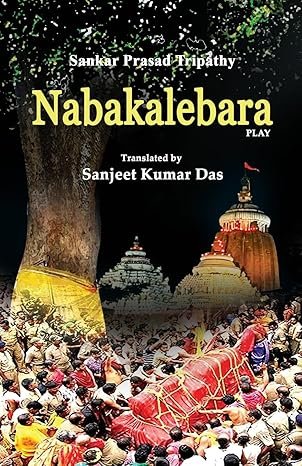
₹250.00One of the renowned playwrights of Odisha, Shankar Prasad Tripathy’s Nabakalebara is a historical play. It’s so vast that all other cultures can confluence in its perennial streams of human values. Its universality and all-embracing approach appeal to people worldwide forever. ‘Why we celebrate Nabakalebar’ is foregrounded and well-substantiated thematically in the play. The ideas mapped in this work of art can be critically analyzed as follows: (1) the human desire for territorial expansion as in the character of Akbar, the Great and Mukunda Deva, to some extent because of his alliance with Rudranarayan of Bhurishrestha of the ‘Land of Banga’ to fight against Suleiman Karrani, the King of ‘Gouda Land’ (2) The primal instinct of love obliterating social boundaries persists between Kalapahada, commander-in-Chief of the combined force of the King of Kalinga and Bhurishrestha and Gulnaz, the daughter of Suleiman Karrani, of ‘Land of Gouda’ (3) the traumatic experiences of the protagonist lacking spiritual bliss, after fulfilling his love-marriage with Gulnaz and his subsequent revengeful acts against the deities and the people of Odisha, (4) Reinstallation of Brahmas in the idols and their mounting on the bejewelled throne (Ratnasinghashana) at the Jagannatha Temple, Puri reaffirms and rejuvenates faith in the people again that Brahma (Supreme Soul) is One and only One, eternal and can’t be destroyed by anybody and anything in the material world. That’s why, Kalapahada, at last broke apart, while trying to burn in fire. Jagannatha is the root cause of everything happening in the world. His blessing helps the people move forward in day-to-day life.The Nabakalebara festival is deeply rooted in the psyches of the people who love the Jagannatha cult. It’s similar to the demise and rebirth of life in all religions of the world. It happens every twelve years. Anything that comes out of this earth is subject to decay and change. The external bodily forms of the idols are buried under the soil in Koilibaikuntha, Puri, whereas the Brahma remains intact and installed again in the newly made wooden idols. There is one and only one Brahma in the world. That can’t be drowned in water, burnt in fire; that can’t be severed or split and will remain unaltered for ages. Once the idols are half-burnt and thrown into the sea, they can’t be worshipped. The new idols (Darubrahmas) are installed and mounted on the (Ratnasinghasana) bejewelled throne at Jagannatha Temple, Puri. Selection of Darus as per the order of Goddess Mangala, and its felling after chanting the mantras, and performing Yajna, transferring the Darus loaded on bullock carts to Jagannatha Temple, Puri, and replacing older idols by the newer ones, and lastly the installing Brahmas in the newer Darus are the processes related to Nabakalebara ceremony.
-
Parikshit Awating and Siddharth the Other
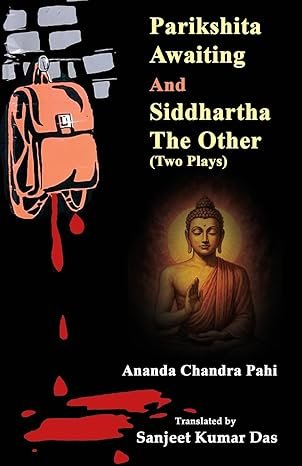
₹250.00The plot of the play Parikshita Awaiting is based on social realism, how a small kid gets affected by the incidents happening in the surroundings every day, and fear engulfs the senior most persons in the family and society. I have stated above that culture/ society/environment shapes an individual. Parikshita, the play’s protagonist, and other family members, like two sons, Sandeep and Pradeep and wife, Shashwati, are sprayed by the fear complex at home. This fear factor engulfs the entire family members when Parikshita opens the letter inserted in the door stating, ‘Your head will be severed from the body’. That was written by a child, Chintu, a classmate of Parikshita’s younger son, Pradeep. He writes it out of anger. But the family members and neighbours think that a hardcore criminal or goon has chalked out this evil plan carefully.
The protagonist, Siddhartha, in the second play, Siddhartha, the Other, makes the people aware of the life they have been blessed with on this planet. He doesn’t discuss salvation, nirvana, moksha, or enlightenment like Goutam Buddha. Here, he advocates for the people on Earth to focus on the work that will make them immortal. In this play, Siddhartha, the only son of the industrialist Rajendra, leaves his father, fiancée Lopa and friend Sambit to meditate in the dense forest full of wild creatures of the Mountain of Himalayas. Rajendra, Lopa, and Sambit, accompanied by security personnel, have followed him since he ran away from home. While meditating, he visits heaven in his dream and meets the God of Wealth, Kubera and Agni Deva, the God of Fire, and finally, Vishnu, God the Almighty. Siddhartha asks them, “How can the people on Earth attain the immortal life you all experience here in heaven?” Their answers bring out the new changes in Siddhartha’s life. Where there is no death, there is no life. There is nothing new. No changes are marked in the life. Our ever-youthfulness and eternal spring in heaven make our life monotonous and disappointing. We have been suffering this life since time immemorial as if cursed. But the people on Earth like you think that we enjoy life here. Variety is the beauty of life that you all experience there. Sometimes, some of us step down to Earth and get thrilled. Initially, he requests the Almighty to bless the people with jatismara(the power to recollect their past lives). But later, he understood the repercussions of that.
-
Serenade of Life Force
₹280.00Prof. (Dr) Sanghamitra Mishra is an acclaimed critic and writer who has earned her name in Odia language and literature. Here, I have attempted to translate her four short Odia plays into English as “Golden Bridge”, “Our Geeti: Our Pride”, “Suchana: The Name of a Girl”, and “Last Quarter of Anticipation” respectively, and rendered the title Serenade of Life Force for this collection of plays for the readers to go through on the global platform. In all the plays, female characters are vibrant. They act as connecting links to bridge the gap perceived in human relationships in society. All the domestic plays are with characters chosen from real-life situations. The follies and foibles of human life are with ups and downs strewn nicely together but never thwarted permanently because of the life force already within every individual and consistently reinforces them to move upward. This life force galvanizes the characters taken into consideration in all the plays concerned herewith the female protagonists to fight against the social oddities and stereotypes sometimes silently, but often to socialize, negotiate, and poise with society convincingly. The dramatist has played a masterstroke in bringing these characters to the limelight and proving that their active participation in families and societies practically reduces the tension erupting anywhere.
-
The Conquest of Kanchi: A Play
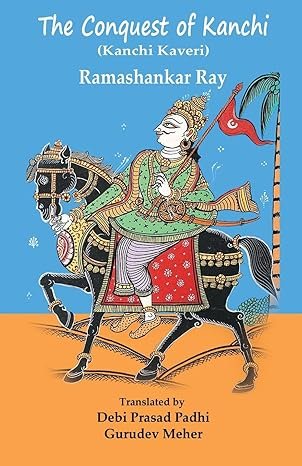
₹250.00The Conquest of Kanchi (1880) is the first play of Ramshankar Ray which was staged in 1881. It is based on the historic war between Gajapati Purushottam Dev, the illustrious king of the Surya dynasty of Odisha; and Saluva Narasimha Dev, the ruler of Kanchi. The play is foregrounded on the legend of romantic love between Gajapati King Purushottam Dev and Padmavati, the princess of Kanchi which led to the invasion of Kanchi and eventually their wedding. Ray has retained the legend of Lord Jagannath and Lord Balabhadra joining the battle, being entertained by the milkmaid Manika on the way to Kanchi and the minister’s ingenious efforts to unite the lovers in wedlock during Rath Yatra. Ray has adapted this glorious history of love and has added romance, heroism, conflict, excitement, war, suspense and surprise to transform it into an entertaining work of art. The play instantly won audiences’ hearts with its popular nationalistic theme and attractive presentation.
-
The Message
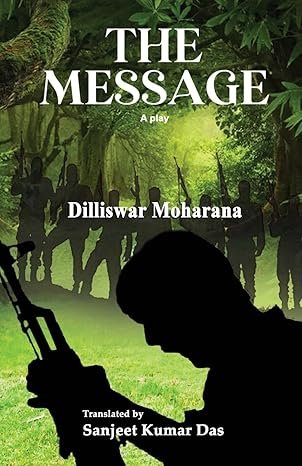
₹250.00The play’s plot unfolds with the protagonist, Arun, a First Class First Post Graduate student. Despite his good academic record, he could not get a job at the university. Average students get jobs in society due to political interference. Frustrated with the social system, he joins the Save India Fighter Organization (S.I.F.O.), an extremist group. The senior Freedom Fighter, Sugreeva Nayak’s daughter, Surabhi, is Arun’s crush. Their love gets approved by their parents. When her innocence is ruined by the associates of the political leaders Anadi Babu and Paramapriya Babu, she joins the S.I.F.O. group. Her illegitimate child, Alok, is brought to the S.I.F.O. Camp. The theme revolves around the character of Arun, who becomes a S.I.F.O. Fighter and is later convinced to join the mainstream of society. The commander’s dialogue matters here, “There are multiple entrance points, but no exit point to the extremists’ camp. Nobody can return from this organization with life.” Arun and his love Surabhi lose their lives while attempting to leave the camp towards the end of the play. When Doctor Satya Sanatan is kidnapped to their camp, his strong personality influences the fighters. He interacts with the S.I.F.O. Fighter Arun.Arun asks Doctor Satya Sanatan, “What do you mean by ‘Revolution’?” Satya Sanatan, a well-known writer, and a doctor, responds to Arun as follows: It is the transformation of an individual from the path of degeneration to righteousness, the correction of wrong to right, and the cultural change from horror to loveliness and the eternal. Revolution is not the slogan for an overnight storm. It can’t be achieved in a day. It needs mental preparedness and strong perseverance. Above all, it earnestly seeks the public’s approval, for this one can’t reach the people with a gun. People’s opinion is like an infant. We must glue our hearts with them with the softness of love and affection and give up pride to win their hearts. It would help if you served them. One must remember the truth that violence always gives birth to violence, love to love, and light to light. Arun again says, “We fight and will be fighting for the innocent people who are victimized and exploited daily in their lives by the rich and the hegemonic groups in power.”Satya again warns Arun, “Have you ever met your S.I.F.O. Chief? Have you ever understood where you get food, ammunition, and explosives? Or have you ever been given any chance to know all this? But why? Why are they so sympathetic to our country? Staying in foreign lands, they achieve their objectives using the people of this country. They never respect your aims.” Furthermore, Satya Sanatan adds, “Don’t think murdering a commoner is an adventurous work. If you want to prove that you and your organization are more powerful and above the law and the government, you are mistaken. You will be mean if you want to take revenge. You are afraid of the society. You have lost your courage to face the reality of life. Your future has terrified you so much that you are ready to bloodstain your present.”What your one lakh S.I.F.O. fighters do daily must be corrected. But at the end of the play, Doctor Satya Sanatan and Alok have been released from the camp. The play has a strong message about how Gandhism wins over Terrorism or Extremism.