-
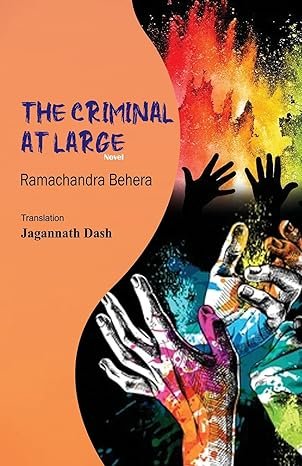
The Criminal At Large
₹250.00THE CRIMINAL AT LARGE is a nontraditional story of feminism that attempts a definition of woman through a series of thrilling episodes narrated in an arresting style and language that keep the reader spell bound. Chhaya, the female protagonist in the process of becoming a woman experiences the impact of different male touches including that of brutal bestiality. She never gives in to anything; she challenges the legal system, asserts a prestigious social position commanding love and respect; yet the question about what she is remains unanswered.
-

The Exiled
₹450.00Ramshankar Ray’s Bibasini (1891), believed to be the second full length novel in Odia, the first being Umesh Chandra Sarkar’s Padmamali (1888), is a novel with an intricately woven plot structure written in style that is at once descriptive, informative, and lyrical. Viewed mostly as a work of fiction delicately poised between a historical romance and a socio-political narrative, Bibasini relates to the period of Maratha hegemony over Odisha spanning from 1751 till the British occupation of the province in 1803. It holds out a panoramic view of Odisha reeling under the tyranny of the Maratha ruler Shambhuji Ganesh Rao during 1769 to 1771, and of the native resistance offered in terms of sporadic but organised assaults launched on the oppressors and collaborators by the Bhuyan dacoits acting at the instances and with the support of the king of Kujanga, Paradip.
The plot that seemingly centres round a tragic love story is actually a complex one, knitting many strands of random episodes into an attractive and coherent tale of unmerited suffering, of crime and vengeance, of sin and retribution. The novel is thronged with characters from different socio-cultural backgrounds, portraying multiple contours of Odisha, the social, cultural, economic and religious ones being the most pronounced amongst them. The novel chronicles the agrarian crisis in Odisha during the Maratha rule and the debacle of the famine that threatened to bring the peasantry of Odisha down to a state of collapse. It narrates the hardship and the misery of the common man especially those who earned their living through farming, had to pass through under the repressive measures of a tyrannous governance and the selfishness and all-devouring avarice of the moneyed local landowners or zamindars.
It is also a gripping tale of a band of burglars, motivated by a romanticised ideal of plundering the rich to sustain the poor, assuming the role of the vindicators of socio-economic equality. They declare themselves as the god’s chosen moral agents for delivering violent justice to the wrongdoers. At the same time the novel camouflages a satire on the hollow morals of a socio-cultural system that compels a Hindu widow to practice religious austerity and denies her the right of living the life of a normal woman.
The novel also details the spread of a new religious cult, Vaishnavism, in Odisha that advocated the worship of Lord Hari( Vishnu) and pleaded against a discriminatory caste system that deprived the people of the lesser caste and poor economic status of their legitimate rights. The preachings of the Vaishnava monks Hanuman Dasa and Giridhari Dasa, appears to reflect a semblance of the mystique.
-
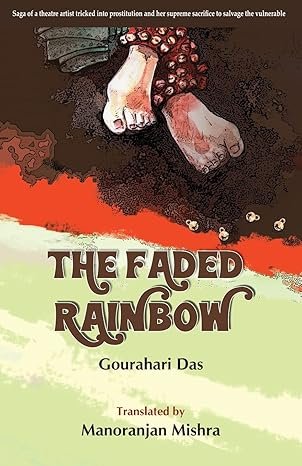
The Faded Rainbow
₹250.00The Faded Rainbow is the English translation of Gourahari Das’s novel Chhayasoudhara Abasesha. The Odia novel, published in 1996, was the writer’s maiden attempt at the genre. The Faded Rainbow offers multiple interpretations to the readers. It is no doubt a study in feminism. It can also be interpreted as a quest for self by its female protagonist, Minu. Her attempts to lend meaning to her otherwise frustrated, meaningless and gloomy existence can be another way of looking at it.
-
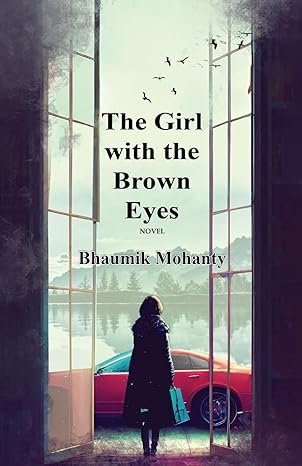
The Girl with the Brown Eyes
₹300.00This is Bhaumik Mohanty’s second novel after ‘I Did, Did I’. He continues his adventure into the world of magical realism. This sequel brings the characters to life again but with a different place, space and tone. Bhaumik has this uncanny ability to juggle between the real world and the world of imagination. His words flow like fountains as the characters and plots move between time and space. What appears to be a truth gets entangled with magical realism and creates a beautiful novel.
-

The Infidel
₹150.00Asati (original novella in Odia) was written in 1962 and published in 1966. The author was a fresh college graduate and only 21 years old when he wrote this novella; yet the same is being treated as one of the classic writings of modern Odia literature. The sensitivity of the author towards inequity and injustice is well echoed in the voices of the protagonist. The protagonist hopes for a better and just society where everyone has equal rights over life. The conflict between haves and have’nots is well reflected in the novel. The plot revolves around the conflict between an idealistic hero, his lady love and a set of wicked, selfish and rich characters. The issues and conflicts in the novella are so relevant that the story makes us hope for a better change even today. This book, in its true sense is immortal and talks about common man for more than six decades and will continue to do so. The new generation readers need to know the life, mind-set and conflict youth of the 1960s went through and their impact over what Odia society is today.
-

The Justice
₹250.00Ime Borah, who is Uddipan Saikia’s fiancée, is brutally raped at the foot of the hills called the abode of cursed souls and witches. The rapists plan to kill and make her a feast of jackals. But
they fail to do so, and she finally manages to escape from the hills. Unable to forget that she is a rape victim, she makes the hard decision against her mind to spend the rest of her life alone.
Were the rapists caught and punished? Is a rape victim unfit for marriage? Was justice finally done to Ime?
-
-
The Metamorphosis and The Trial
₹350.00In “The metamorphosis,” a man finds himself transformed into a huge insect and experiences many changes in his life, and in “The trial,” narrates the experiences and reactions of a respectable bank functionary after his abrupt arrest on an undisclosed charge.
-
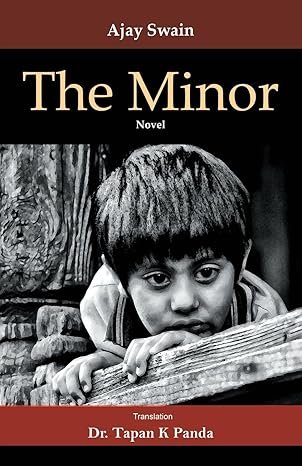
The Minor
₹300.00The Minor (Nabalak) is the story of the metamorphosis of the protagonist. The memories of who he was and where he lived are important to him. When he was a child, he seldom thought of the future. This innocence left him free to enjoy as few adults can. The day he frets about the future is when he leaves his childhood behind. The truth of life is that we get farther away from the essence that is born within us. We get shouldered with burdens, things happen to us, loved ones die, and people lose their way for a reason or another. It’s not hard to do in this world of crazy mazes. Life does its best to take that memory of magic away from us. You don’t know it’s happening until one day we feel we have lost something, but you are not sure what it is. Childhood, after all, is the first precious coin.
-
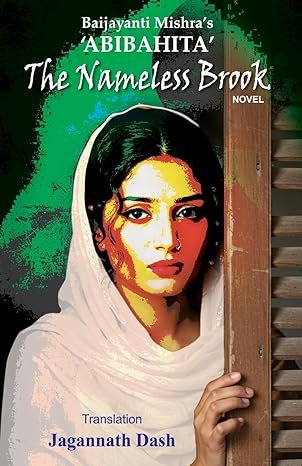
The Nameless Brook
₹400.00The Nameless Brook (Odia-Abibahita) is a moving tale of Jhara, a dedicated nurse whose life is shaped by love, loss, and quiet strength. Orphaned and emotionally isolated, she faces heartbreak, betrayal, and the weight of societal judgment. When she meets Suren-a gentle soul trapped in a loveless marriage-Jhara forms an unexpected bond with him and his daughter, Rista. But tragedy strikes, leaving Suren paralyzed and Rista vulnerable. Defying convention and family pressure, Jhara steps in as their caregiver and emotional anchor. Through trials of love, duty, and identity, the novel unfolds as a story of resilience and selfless devotion, where Jhara discovers that true family is built on compassion, not convention.
-
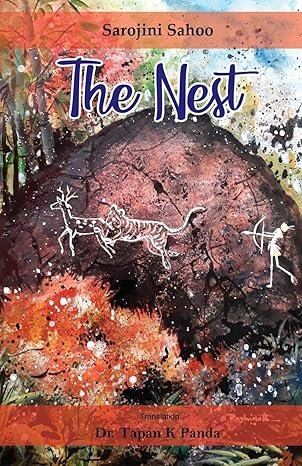
The Nest
₹300.00Pakhibsa is a story of the decadence of a family and their dream. This multi-dimensional novel includes a downtrodden family saga and the socio-economic picture of Odisha. The novel portrays a chain of events of an untouchable, downtrodden cattle bone collector, called Satnemis (through the protagonist Antaraa) and his family in western Orissa. Antaraa, the head of the family; his wife Sarasi; their three sons Sanyaasi, Daaktar, and Okil; and their daughter Parabaa.
A downtrodden man dreams of seeing his sons established in their lives. So, he names them Collector, Doctor (Daaktar), and Lawyer (Okil). He dreams of seeing his only daughter, Parabaa, as a bride, but was it ever possible?
The elder son, Sanyaasi, became a bohemian artist. The second son Daaktar became a bonded labourer. The third son Okil joins the Naxals. Days of hunger force Parabaa to be raped for a plate of rice by a forest guard, and later, she adopts the profession of prostitution. The novel ends with the death of Okil. The author juxtaposes lines from Bhagavat (a holy book in every Odia family) to build melancholy and generate intense emotional outages for the characters.
-
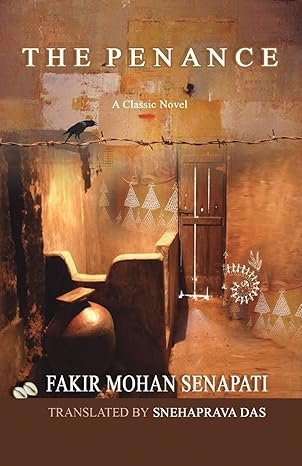
The Penance
₹380.00Prayaschita (The Penance) is the last of Fakir Mohan Senapati’s four novels and the third and the last in his ‘trilogy of crime and justice’, to use the epithet coined by the eminent Senapati scholar John Boulton. The first two novels of the trilogy are Chhamana Athaguntha (1902, Six Acres and a Third) and Mamu (1913, The Maternal Uncle). Prayaschita was published in 1915, just three years before the death of the novelist. The novel is of value for the light it casts on Fakir Mohan Senapati’s increasingly dark and tragic vision of life lived under the shadow of colonialism. He wrote it to defend the traditional values of the Hindu way of life which he saw as being gravely threatened by the alien value system of the British that had made huge inroads into the Indian society. In fact, it is a telling assault on the English education that is perforce mounted in the form of a defense of the traditional Indian society.