-
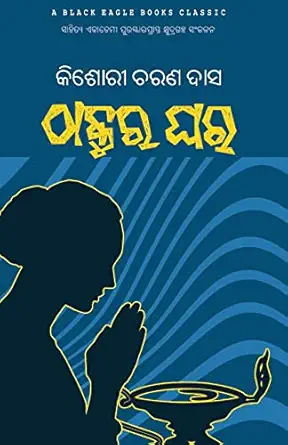
Thakura Ghara
₹280.00Thakura Ghara is a Sahitya Akademi award-winning short story collection by eminent Odia author Kishori Charan Das. This has 20 powerful short stories. This collection has been translated in many Indian languages and Indian national television Doordarshan has made a telefilm based on the title story Thakura Ghara.
-

The Actor
₹350.00Binod is a young theatre artist who works for Dasabhuja Theatrical Company. He is well educated and had an ardent desire to become a lecturer in a college but fate is like a strange, unpopular restaurant filled with odd little waiters who bring you things you never asked for and don’t always like. On his visit to Puri, he looks at Lord Jagannath, Sudarshan Chakra, and the flag on it and envisages staging the play ‘Neela Saila’ for Bali Yatra Play competition based on Surendra Mohanty’s novel ‘NeelaSaila’ on history, myth, and legends. It was difficult to find a playwright who can dramatize the novel. An old playwright Dhira babu gives his consent to write but he falls sick. Finally, Binod takes the responsibility to write the play and to give the direction. He overcomes the hurdles in staging the play ‘NeelaSaila’ and it wins the first prize in the competition. The agony of a theatre artist and a playwright is well outlined in the story.
-
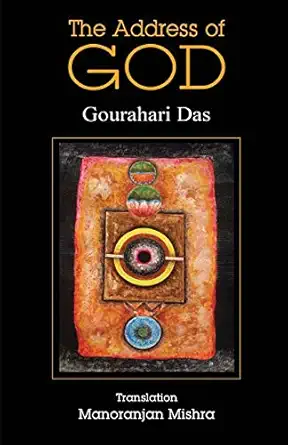
The Address of God
₹500.00TheAddressofGod, which is, at first sight, a collection of columns written on different occasions to reflect upon or make sense of particular incidents experienced or witnessed by its central character reminds one of a pointillist painting. Each piece in this volume can be seen as a dot on a richly complex canvas which, in combination with other dots, illuminates the shifting contours of a moral and social universe in flux. Apparently unconnected with each other and recounting seemingly isolated events in the lives of ordinary, unremarkable characters, these pieces cumulatively create a living mosaic of impressions that helps one pierce to the fundamentals of existence. The Address of God is studded with such luminously evocative images, which lead us to the rich texture of the meaning underlying the deceptively ordinary surface of the pieces. They disclose the inscrutable wisdom of the heart to which petty calculations of human intellect are utter strangers. The volume draws its intensity from the unobtrusive mastery with which the author employs these images. They stay with us long after we rise from a reading of the narrative the author has expertly woven from fragments of everyday experienc
-

The Age Of Innocence
₹300.00The return of the beautiful Countess Olenska into the rigidly conventional society of New York sends reverberations throughout the upper reaches of society.
Newland Archer, an eligible young man of the establishment is about to announce his engagement to May Welland, a pretty ingénue, when May’s cousin, Countess Olenska, is introduced into their circle. The Countess brings with her an aura of European sophistication and a hint of scandal, having left her husband and claimed her independence.
Her sorrowful eyes, her tragic worldliness and her air of unapproachability attract the sensitive Newland and, almost against their will, a passionate bond develops between them. But Archer’s life has no place for passion and, with society on the side of May and all she stands for, he finds himself drawn into a bitter conflict between love and duty.
-
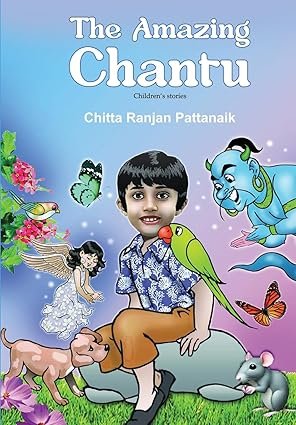
The Amazing Chantu
₹300.00CONTENTS
===========
THAT LITTLE BIRD
THE RED AND THE BLUE
THE TWO FRIENDS
THE LONG JUMP
THE HAUNTED HOUSE
THE MIRACULOUS LAMP
A UNIQUE MARRIAGE
THE BREAKUP
THE BIRTHDAY
THE MOST VALUABLE STUDENT
THE ANT
THE AMBROSIA FRUIT
THE BUTTERFLY
THE FAIRIES
THE BALLOONS
The Amazing Chantu
-
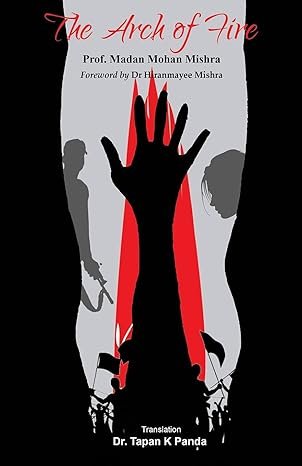
The Arch of Fire
₹250.00‘The Arch of Fire’ is based on the Naxalite’ tactic against the Indian State. Seizing land from oppressors and redistributing it amongst the peasants has been the aim of the Naxalites since its creation. In 1967, oppressed peasants inspired by the communist movement raised their bows and arrows against the feudal landowners in Naxalbari. Naxalites, raised their upgraded, more sophisticated weapons against mining corporations and development projects which threatened to expel indigenous tribes or Adivasis from their ancestral lands in order to exploit the mineral-rich soil. The Naxalite movement as we know it today, its emergence is a result of the various fragmentations of communist ideologies in India over time. Hence, in order to comprehend the nature of Naxalism, one must first delve into its own tumultuous history. This novel received Odisha Sahitya Academy award in 1989.
-
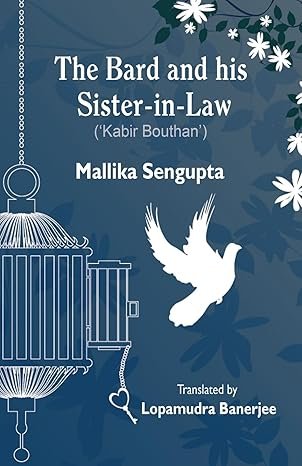
The Bard and his Sister-in-Law
₹450.00A historical novel/biographical nonfiction by award-winning feminist author/poet Mallika Sengupta from Kolkata, India, ‘Kabir Bouthan’ focuses on the multifaceted history of the illustrious Jorasanko Thakurbari, Kolkata, the birth place of Nobel laureate Rabindranath Tagore (mentioned in the book as ‘Rabi’). The narrative chronicles the inter personal relationships between the men and women inside that mansion and their personal journeys which become historically significant in terms of gender and culture studies of the pre-independence era in India and also in terms of the development of Tagore’s poetic persona. Through this deeply layered narrative encompassing the lives of Rabi, his family members, and especially his two enigmatic sisters-in-law, Gyanadanandini and Kadambari Devi, Sengupta reflects on the daily rigmarole of the lives of the characters amid the backdrop of the Renaissance in Bengal. Through her effortless and nuanced narration and storytelling, she also unfolds the subtle nuances of the socio-political history of Bengal in those times.
Seeped in the diverse cultural history of the Thakurbari where stalwarts in literature, art, theater and humanities were born, rooted in the rich legacy of Bengal, this book also documents the dramatic and inspiring transformation of women like Gyanadanandini, Kadambari, Swarnakumari Devi, while also tracing their emotional journeys, celebrating their free spirits and their quest for self-expression during the strife-ridden colonial regime in India.
-

The BigBridge Book of Contemporary Indian Poetry
₹450.00Indian poets writing in English have earned their space on the global stage, forging new paths and moulding the language to suit the Indian landscape, concerns, and themes. When Nissim Ezekiel crossed new frontiers with his ‘A Time to Change’ in 1952, it was recognised as one of the first significant books of postcolonial poetry in English; decades later, however, sceptics continued to ask why Indians insisted on writing in English and not in their mother tongues. An exasperated Saleem Peeradina said to me in an interview soon after his debut poetry collection First Offence appeared in 1980, “This question should be outlawed!” Mercifully, though such discussions may still linger in some academic circles, the issue no longer merits attention, at least among poets.
-

-
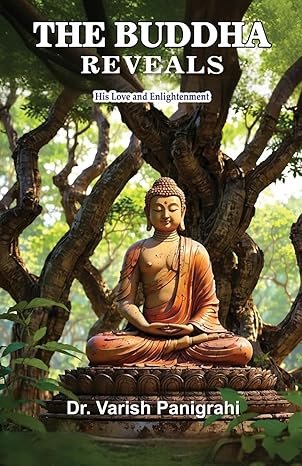
The Buddha Reveals
₹500.00The story of Siddhartha and Yashodhara, their romantic marriage, marital life, the birth of the son Rahula, and the eventual transformation in their relationship when Siddhartha left home are depicted here. They were mortals of flesh and emotions in an immortal partnership of love, understanding, and compassion! After toiling for six years in the jungles, Siddhartha achieved enlightenment and found the path to happiness in a constantly changing and suffering world and became the Buddha. Read also all the stories of how the Buddha handled the events of his long life with equanimity and championed the cause of individual dignity and the Dharma.
-

The Butterfly of the Cage
₹250.00This collection of English poems, ‘The Butterfly of the Cage’, the second transcreation by the author himself from his original Odia poetry collection ‘Panjurira Prajapati’ is based on varied themes and thoughts like human desire and despair, agony and aspiration, emotion and passion, rejoice and sorrow, love and hatred, belief and betrayal, sweet and sour memories, satire and irony, delusion and illusion, splendour of the nature, the philosophy of life, death and time, the untouched layers of human behaviour and instinct, apprehension for the uncertain future of man and environment due to anthropogenic activities, and even poetic representation of some scientific phenomena which rarely finds its place in poetry. Its ‘Prologue’ depicts an introduction to Poetry, English Poetry and Indian English Poetry which is no less than a research paper and a must read.
The book is dedicated to eminent Indian poet Padma Shri Dr. Jayanta Mahapatra who passed away on August 27th, 2023.
-
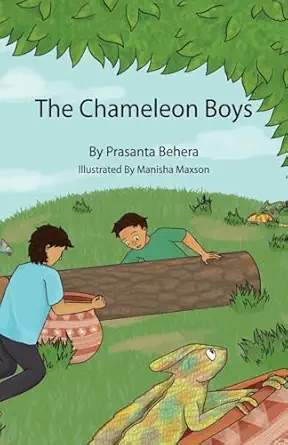
The Chameleon Boys
₹150.00*The Chameleon Boys* is a heartwarming tale set in a quaint Indian village, following five mischievous cousins known for their summer adventures. When young Karina visits her family in India, she discovers old photographs of her uncles as children and becomes captivated by their playful antics. Her father shares stories of their escapades, revealing how they earned their nickname through clever pranks and a deep connection to nature, particularly chameleons.
As summer unfolds, the boys embark on a thrilling quest inspired by clues from an ancient priest, leading them on a journey to uncover a hidden treasure. Filled with excitement, friendship, and a love for the outdoors, the story celebrates the simple joys of childhood and the enduring bonds of family.