• The India Grandpa Has Never Seen

    The India Grandpa Has Never Seen

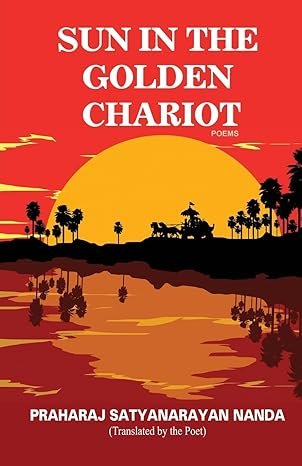
    The India Grandpa Has Never Seen is the translation of the poet’s Jeje Dekhinathiba Bharat which won him the prestigious Sarala Award. Rich in romantic essence that transports the readers into our pastoral origins in which modern India is deeply entrenched, this collection has finely crafted poems. The poet essays to explore through poetry the spirit of Mother India that reminds its children of the core values for which the geo-political map stands as a mute testimony. The scheme of symbolism the poet adopts is intricate because of the ethnic quality he invests in the emotions through agrarian imagery. The rural rituals, customs and myths surrounding poverty in the countryside is peculiarly Indian. The portrait of India in terms of its emotions encompassing the quality of life and the degeneration of human values in the hands of a chosen few is awe-inspiring.

    250.00
    Add to cart
  • The Indian Who Moved Back

    The Indian Who Moved Back

    This memoir brings out the unique life journey in a remote village where the oral traditions and customs taught the children. The school in the village hut with a hay roof supplanted that education. The high school education in the district headquarters town represented the best education offered by the government schools of the time. The moves to the NIT, IIT, and the University of Illinois were a natural progression to learn the latest in electronics. The eclectic work experience with Burroughs, Bell Labs, RCA, Digital Equipment, and Process Software imparted a rich experience in Semi, Computers, Networks, AI, etc., spanning a quarter century. The move back to a second-tier city in India to start and sustain a software applications and service company for fourteen years was the urge to serve the motherland. The last fifteen years in retirement have been blessed with varied altruistic and intellectual activities on a Zen journey to Nirvana!

    The memoir details the stepwise march towards the ultimate goals while taking into account the well-being of the whole family. It points out some of the pitfalls of both American and Indian societies and how to tune oneself in old age.

    450.00
    Add to cart
  • The Infidel

    The Infidel

    Asati (original novella in Odia) was written in 1962 and published in 1966. The author was a fresh college graduate and only 21 years old when he wrote this novella; yet the same is being treated as one of the classic writings of modern Odia literature. The sensitivity of the author towards inequity and injustice is well echoed in the voices of the protagonist. The protagonist hopes for a better and just society where everyone has equal rights over life. The conflict between haves and have’nots is well reflected in the novel. The plot revolves around the conflict between an idealistic hero, his lady love and a set of wicked, selfish and rich characters. The issues and conflicts in the novella are so relevant that the story makes us hope for a better change even today. This book, in its true sense is immortal and talks about common man for more than six decades and will continue to do so. The new generation readers need to know the life, mind-set and conflict youth of the 1960s went through and their impact over what Odia society is today.

    150.00
    Add to cart
  • The Journey Starts Here: Global Management And Tourism Trends

    The Journey Starts Here: Global Management And Tourism Trends

    In recent times, the tourism and hospitality industry has undergone a metamorphosis, marked by increasing competitiveness and a dynamic market. The nature of demand has changed along with the profile of the consumer. This book is a collection of articles on various contemporary trends that are influencing the dynamics of the Tourism and Travel industry. A new tourism is emerging – one which takes into account the complexity and segmentation of tourism demand, the greater flexibility of supply, distribution and consumption and the search for new sources of profitability in the industry. Innovation is a crucial driver to develop and establish successful, dynamic, customer-centric e-tourism platforms.

    500.00
    Add to cart
  • The Justice

    The Justice

    Ime Borah, who is Uddipan Saikia’s fiancée, is brutally raped at the foot of the hills called the abode of cursed souls and witches. The rapists plan to kill and make her a feast of jackals. But

    they fail to do so, and she finally manages to escape from the hills. Unable to forget that she is a rape victim, she makes the hard decision against her mind to spend the rest of her life alone.

    Were the rapists caught and punished? Is a rape victim unfit for marriage? Was justice finally done to Ime?

    250.00
    Add to cart
  • The Land of No Return

    The Land of No Return

    On the banks of the river Gobari, completely engulfed in the darkness and amongst tall trees- lay our dream island- Jambu! We only knew someone before this visit who could help us with a night stay. Loading our bike on a country boat, we reached the other side of Jambu, popularly called Jambunut. Ravi Tripathy had an earlier acquaintance with Govind Senapati- the khalasi (loader) of the irrigation department who lived in a tile-roofed government quarter. There was hardly any facility for water and power. Spreading our mats on the floor, we spent the night brimming about visiting Jambu. The next day, riding a boat on the Gobari River, we were in Jambu to meet many unknown people who later became part of the Jambu Saga.

    Finding time from my academic life between 2010 and 2017, I continued solo travelling to Jambu multiple times. There, I was introduced to Sri Samarendra Mohanty, a television reporter from the Chhapali Chowk. He could comprehend my working style and extended full cooperation to me. In those seven years, as many times I visited Jambu, my reporter friend Sri Mohanty arranged my stay at varied places- government bungalows, forest bit houses, even in his own home. He had taken me to many places around Jambu like a kind-hearted guide.

    Along with Jambu, he had arranged my visit to Ramnagar Kharnasi, Odisha’s first lighthouse, and to Hukitola- the first port of Odisha. Through a generous introduction to forest guards and rangers of the area, he helped me to understand the topography and lifestyle of the Jambu people. I could have many exciting conversations with younger and older people from different Bangladeshi hamlets and colonies through his kind introductions of me to the Jambu people.

    I tried to tape-record the life and struggle of the people of Jambu. Binoy Das, who was displaced during the civil war and riots in erstwhile East Bengal and finally could settle in Jambu, often turns nostalgic and talks about his struggling days; the cloth merchant turned Indian nationalist Bakul Talukdar; the youth leader Nimain Sarjan who raises his concern and voice for the issues and rights of the refugee brotherhood living in Jambu; Tapan Sikdar who, after being tortured in Bangladesh, along with his family had to leave the country and have greyed in Jambu; Madhoi Mandol who was damn scared after receiving an expulsion notice from the Indian government for illegal entry into India; Kadamb Sena, with nine months pregnancy fled the country during the East Bengal and Pakistan civil war and arrived here. I tried to record the lifestyle and life stories of hundreds of people of Jambu, like Jatia of Kharnasi village and octogenarian Purjan Mandal.

    Only one common malice of these refugees in Jambu inspired me to write this novel. Jambu has seen three generations since the 1960s. They have an unresolved question: Which nation do they belong to? The country they left a long time ago or the country in which they have been living for generations!! One nation brands expatriates, and another government names them as ‘refugees’. Wherever there is a civil war, a religious war, or a political war related to international borders, people are bound to cross the geographic boundaries as refugees for their own and kin’s safety and welfare. The issues of displacement and refugees are global phenomena. Jambu may be a tiny place on the world map of immigration and refugee settlement. Still, Jambu continues to be a mini-representative of refugee colonies of the world. After arriving at these colonies, including Jambu, There is no way open to going back. Jambu is the Land of No Return!!!

    350.00
    Add to cart
  • The Lexicon of Disability Studies

    The Lexicon of Disability Studies

    The Lexicon of Disability Studies seeks to expand and articulate the conceptual landscape of Disability studies for both scholars and practitioners, addressing some of the most critical debates of our era. These include issues like disease, pain, euthanasia, public transportation accessibility, aesthetics, and deformity.

    This volume explores a range of critical concepts, such as ‘alienation, ‘ ‘audism, ‘ ‘divyaang, ‘ ‘freak, ‘ ‘identity, ‘ and ‘stigma, ‘ among others. Rather than treating individual disabilities as standalone keywords, the essays delve into broader ideas that reflect the diverse social and bodily experiences associated with disability. The book examines disability as an embodied condition, a dynamic historical phenomenon, and a multifaceted social, political, and cultural identity.

    Serving as an invaluable resource for both students and scholars, The Lexicon of Disability Studies brings previously insular debates within Disability studies into broader critical conversations. It invites fresh theoretical insights into the field’s fundamental assumptions from various disciplinary perspectives, making it a vital addition to contemporary discourse.

    450.00
    Add to cart
  • The Lone Man Near the Window

    The Lone Man Near the Window

    This book, The Lone Man Near the Window, is like an identity to the experiences of a keen family person in his/her lonesome moments. It is not only about the poet’s life, lessons, thoughts rather an extension of you, me and all sensitive persons who in real face, feel and resemble such phases narrated in each individual poetry.This piece of art can’t be absorbed by an one go reading. Though it is adorned with very simple words yet has deep impacting topics orchestrated with word senses and harmony.The concept and the purpose of the book can’t be gulped down in a single reading. To understand the seamless process, one has to live each and every philosophy coated in words. The original book by revered Poet Dr. Bibhudatta Nayak is literally an experience manual which describes the tit bits of life tools. It enlists the ingredients and principles of life which make our lives sweet, sour, annoying, energetic, challenging, emotional, decisive, philosophical at times. Most of the experiences of daily chores in this mundane world have given a euphonious shape of distinct poetry in this book.

    250.00
    Add to cart
  • The Message

    The Message

    The play’s plot unfolds with the protagonist, Arun, a First Class First Post Graduate student. Despite his good academic record, he could not get a job at the university. Average students get jobs in society due to political interference. Frustrated with the social system, he joins the Save India Fighter Organization (S.I.F.O.), an extremist group. The senior Freedom Fighter, Sugreeva Nayak’s daughter, Surabhi, is Arun’s crush. Their love gets approved by their parents. When her innocence is ruined by the associates of the political leaders Anadi Babu and Paramapriya Babu, she joins the S.I.F.O. group. Her illegitimate child, Alok, is brought to the S.I.F.O. Camp. The theme revolves around the character of Arun, who becomes a S.I.F.O. Fighter and is later convinced to join the mainstream of society. The commander’s dialogue matters here, “There are multiple entrance points, but no exit point to the extremists’ camp. Nobody can return from this organization with life.” Arun and his love Surabhi lose their lives while attempting to leave the camp towards the end of the play. When Doctor Satya Sanatan is kidnapped to their camp, his strong personality influences the fighters. He interacts with the S.I.F.O. Fighter Arun.Arun asks Doctor Satya Sanatan, “What do you mean by ‘Revolution’?” Satya Sanatan, a well-known writer, and a doctor, responds to Arun as follows: It is the transformation of an individual from the path of degeneration to righteousness, the correction of wrong to right, and the cultural change from horror to loveliness and the eternal. Revolution is not the slogan for an overnight storm. It can’t be achieved in a day. It needs mental preparedness and strong perseverance. Above all, it earnestly seeks the public’s approval, for this one can’t reach the people with a gun. People’s opinion is like an infant. We must glue our hearts with them with the softness of love and affection and give up pride to win their hearts. It would help if you served them. One must remember the truth that violence always gives birth to violence, love to love, and light to light. Arun again says, “We fight and will be fighting for the innocent people who are victimized and exploited daily in their lives by the rich and the hegemonic groups in power.”Satya again warns Arun, “Have you ever met your S.I.F.O. Chief? Have you ever understood where you get food, ammunition, and explosives? Or have you ever been given any chance to know all this? But why? Why are they so sympathetic to our country? Staying in foreign lands, they achieve their objectives using the people of this country. They never respect your aims.” Furthermore, Satya Sanatan adds, “Don’t think murdering a commoner is an adventurous work. If you want to prove that you and your organization are more powerful and above the law and the government, you are mistaken. You will be mean if you want to take revenge. You are afraid of the society. You have lost your courage to face the reality of life. Your future has terrified you so much that you are ready to bloodstain your present.”What your one lakh S.I.F.O. fighters do daily must be corrected. But at the end of the play, Doctor Satya Sanatan and Alok have been released from the camp. The play has a strong message about how Gandhism wins over Terrorism or Extremism.

    250.00
    Add to cart
  • The Metamorphosis and The Trial

    The Metamorphosis and The Trial

    In “The metamorphosis,” a man finds himself transformed into a huge insect and experiences many changes in his life, and in “The trial,” narrates the experiences and reactions of a respectable bank functionary after his abrupt arrest on an undisclosed charge.

    350.00
    Add to cart
  • The Minor

    The Minor

    The Minor (Nabalak) is the story of the metamorphosis of the protagonist. The memories of who he was and where he lived are important to him. When he was a child, he seldom thought of the future. This innocence left him free to enjoy as few adults can. The day he frets about the future is when he leaves his childhood behind. The truth of life is that we get farther away from the essence that is born within us. We get shouldered with burdens, things happen to us, loved ones die, and people lose their way for a reason or another. It’s not hard to do in this world of crazy mazes. Life does its best to take that memory of magic away from us. You don’t know it’s happening until one day we feel we have lost something, but you are not sure what it is. Childhood, after all, is the first precious coin.

    300.00
    Add to cart
  • The Nameless Brook

    The Nameless Brook

    The Nameless Brook (Odia-Abibahita) is a moving tale of Jhara, a dedicated nurse whose life is shaped by love, loss, and quiet strength. Orphaned and emotionally isolated, she faces heartbreak, betrayal, and the weight of societal judgment. When she meets Suren-a gentle soul trapped in a loveless marriage-Jhara forms an unexpected bond with him and his daughter, Rista. But tragedy strikes, leaving Suren paralyzed and Rista vulnerable. Defying convention and family pressure, Jhara steps in as their caregiver and emotional anchor. Through trials of love, duty, and identity, the novel unfolds as a story of resilience and selfless devotion, where Jhara discovers that true family is built on compassion, not convention.

    400.00
    Add to cart