-
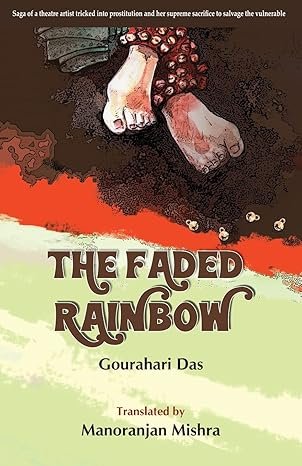
The Faded Rainbow
₹250.00The Faded Rainbow is the English translation of Gourahari Das’s novel Chhayasoudhara Abasesha. The Odia novel, published in 1996, was the writer’s maiden attempt at the genre. The Faded Rainbow offers multiple interpretations to the readers. It is no doubt a study in feminism. It can also be interpreted as a quest for self by its female protagonist, Minu. Her attempts to lend meaning to her otherwise frustrated, meaningless and gloomy existence can be another way of looking at it.
-
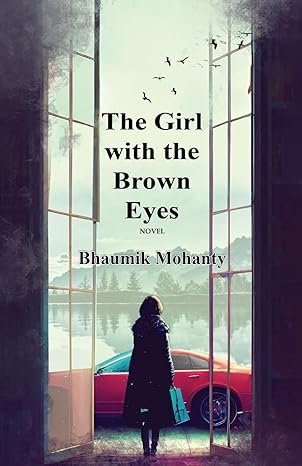
The Girl with the Brown Eyes
₹300.00This is Bhaumik Mohanty’s second novel after ‘I Did, Did I’. He continues his adventure into the world of magical realism. This sequel brings the characters to life again but with a different place, space and tone. Bhaumik has this uncanny ability to juggle between the real world and the world of imagination. His words flow like fountains as the characters and plots move between time and space. What appears to be a truth gets entangled with magical realism and creates a beautiful novel.
-
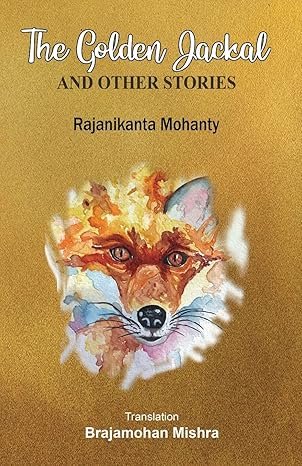
The Golden Jackal and Other Stories
₹230.00Like a face in the crowd, Rajanikanta Mohanty stands obviously apart from the host of golden daffodils of Odia story tellers. Because his apprehension of the multifoliate reality cascading rhythmically all around is, by all means, novel but natty. His sensitive response as a superb creative genius to the panorama and pageantry of contemporary human frailties and frivolities commands both respect and love of enlightened readers. His universe, by no means, registers any hanky-panky since his absolute and obsessive fidelity to experience is unobtrusive and intuitive. In him the reader meets a genius that speaking to men, enters and possesses him/her emotionally and intellectually. A seasoned timber, Rajanikanta has already carved a niche for himself in heterogeneous readers’ hearts. In fact, one does not find very many Odia story tellers like him. The stories in this collection exemplify his satisfying and salubrious departure (In fact Rajani’s trademark) from the hackneyed way of pitching’ the yarn especially thematically. In this connection, it won’t be wide off the mark to remark that he is a literary seer who sees and shows the ‘Viswarupa’ (cosmic form) of our existence. The collection has 16 powerful short stories.
-
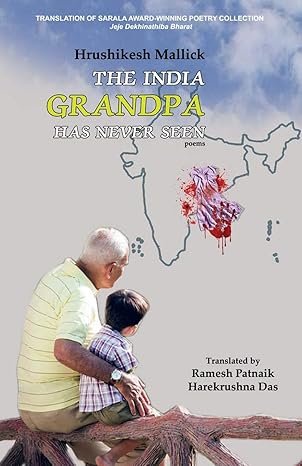
The India Grandpa Has Never Seen
₹250.00The India Grandpa Has Never Seen is the translation of the poet’s Jeje Dekhinathiba Bharat which won him the prestigious Sarala Award. Rich in romantic essence that transports the readers into our pastoral origins in which modern India is deeply entrenched, this collection has finely crafted poems. The poet essays to explore through poetry the spirit of Mother India that reminds its children of the core values for which the geo-political map stands as a mute testimony. The scheme of symbolism the poet adopts is intricate because of the ethnic quality he invests in the emotions through agrarian imagery. The rural rituals, customs and myths surrounding poverty in the countryside is peculiarly Indian. The portrait of India in terms of its emotions encompassing the quality of life and the degeneration of human values in the hands of a chosen few is awe-inspiring.
-
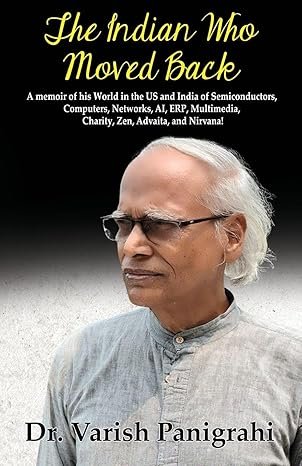
The Indian Who Moved Back
₹450.00This memoir brings out the unique life journey in a remote village where the oral traditions and customs taught the children. The school in the village hut with a hay roof supplanted that education. The high school education in the district headquarters town represented the best education offered by the government schools of the time. The moves to the NIT, IIT, and the University of Illinois were a natural progression to learn the latest in electronics. The eclectic work experience with Burroughs, Bell Labs, RCA, Digital Equipment, and Process Software imparted a rich experience in Semi, Computers, Networks, AI, etc., spanning a quarter century. The move back to a second-tier city in India to start and sustain a software applications and service company for fourteen years was the urge to serve the motherland. The last fifteen years in retirement have been blessed with varied altruistic and intellectual activities on a Zen journey to Nirvana!
The memoir details the stepwise march towards the ultimate goals while taking into account the well-being of the whole family. It points out some of the pitfalls of both American and Indian societies and how to tune oneself in old age.
-

The Infidel
₹150.00Asati (original novella in Odia) was written in 1962 and published in 1966. The author was a fresh college graduate and only 21 years old when he wrote this novella; yet the same is being treated as one of the classic writings of modern Odia literature. The sensitivity of the author towards inequity and injustice is well echoed in the voices of the protagonist. The protagonist hopes for a better and just society where everyone has equal rights over life. The conflict between haves and have’nots is well reflected in the novel. The plot revolves around the conflict between an idealistic hero, his lady love and a set of wicked, selfish and rich characters. The issues and conflicts in the novella are so relevant that the story makes us hope for a better change even today. This book, in its true sense is immortal and talks about common man for more than six decades and will continue to do so. The new generation readers need to know the life, mind-set and conflict youth of the 1960s went through and their impact over what Odia society is today.
-
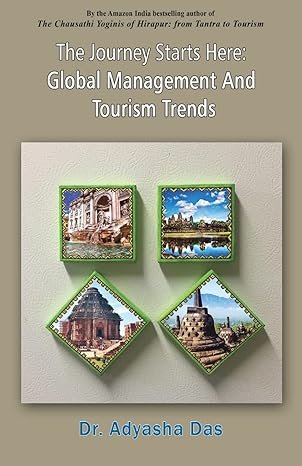
The Journey Starts Here: Global Management And Tourism Trends
₹500.00In recent times, the tourism and hospitality industry has undergone a metamorphosis, marked by increasing competitiveness and a dynamic market. The nature of demand has changed along with the profile of the consumer. This book is a collection of articles on various contemporary trends that are influencing the dynamics of the Tourism and Travel industry. A new tourism is emerging – one which takes into account the complexity and segmentation of tourism demand, the greater flexibility of supply, distribution and consumption and the search for new sources of profitability in the industry. Innovation is a crucial driver to develop and establish successful, dynamic, customer-centric e-tourism platforms.
-

The Justice
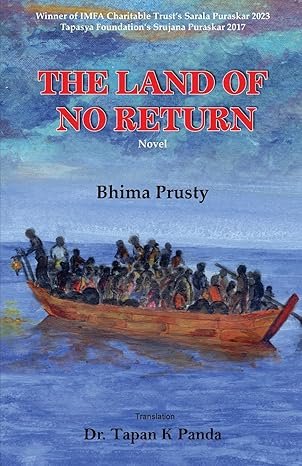
₹250.00Ime Borah, who is Uddipan Saikia’s fiancée, is brutally raped at the foot of the hills called the abode of cursed souls and witches. The rapists plan to kill and make her a feast of jackals. But
they fail to do so, and she finally manages to escape from the hills. Unable to forget that she is a rape victim, she makes the hard decision against her mind to spend the rest of her life alone.
Were the rapists caught and punished? Is a rape victim unfit for marriage? Was justice finally done to Ime?
-
-

The Lexicon of Disability Studies
₹450.00The Lexicon of Disability Studies seeks to expand and articulate the conceptual landscape of Disability studies for both scholars and practitioners, addressing some of the most critical debates of our era. These include issues like disease, pain, euthanasia, public transportation accessibility, aesthetics, and deformity.
This volume explores a range of critical concepts, such as ‘alienation, ‘ ‘audism, ‘ ‘divyaang, ‘ ‘freak, ‘ ‘identity, ‘ and ‘stigma, ‘ among others. Rather than treating individual disabilities as standalone keywords, the essays delve into broader ideas that reflect the diverse social and bodily experiences associated with disability. The book examines disability as an embodied condition, a dynamic historical phenomenon, and a multifaceted social, political, and cultural identity.
Serving as an invaluable resource for both students and scholars, The Lexicon of Disability Studies brings previously insular debates within Disability studies into broader critical conversations. It invites fresh theoretical insights into the field’s fundamental assumptions from various disciplinary perspectives, making it a vital addition to contemporary discourse.
-
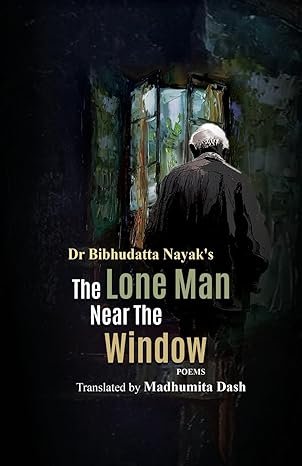
The Lone Man Near the Window
₹250.00This book, The Lone Man Near the Window, is like an identity to the experiences of a keen family person in his/her lonesome moments. It is not only about the poet’s life, lessons, thoughts rather an extension of you, me and all sensitive persons who in real face, feel and resemble such phases narrated in each individual poetry.This piece of art can’t be absorbed by an one go reading. Though it is adorned with very simple words yet has deep impacting topics orchestrated with word senses and harmony.The concept and the purpose of the book can’t be gulped down in a single reading. To understand the seamless process, one has to live each and every philosophy coated in words. The original book by revered Poet Dr. Bibhudatta Nayak is literally an experience manual which describes the tit bits of life tools. It enlists the ingredients and principles of life which make our lives sweet, sour, annoying, energetic, challenging, emotional, decisive, philosophical at times. Most of the experiences of daily chores in this mundane world have given a euphonious shape of distinct poetry in this book.
-
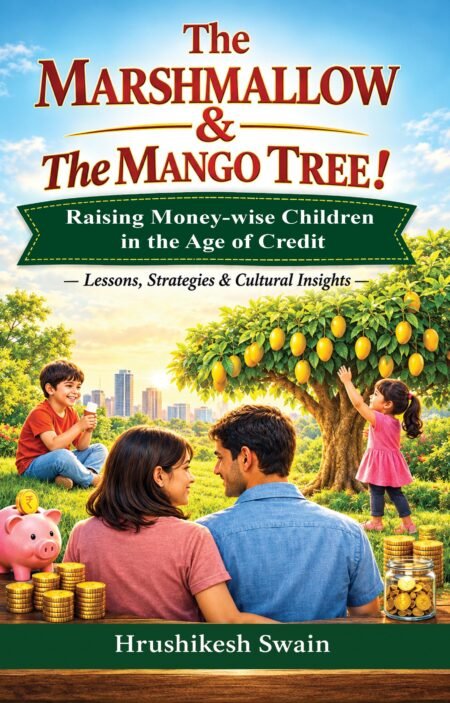
The Marshmallow & The Mango Tree!
₹350.00Hrushikesh Swain is a behavioural finance expert who specialises in helping families build healthy money habits. With a deep understanding of developmental psychology and Indian cultural contexts, they have helped thousands of parents and children transform their relationship with money.